
Description
The Grawemeyer Award for Ideas Improving World Order is given to those who have taken on issues of world importance and presented viewpoints that could lead to a more just and peaceful world. Each idea supports one noble cause: to inspire us all to work together for the common good.
The Award is presented annually to the winner of a competition designed to stimulate the recognition, dissemination and critical analysis of outstanding proposals for improving world order.
Prize Amount
The Grawemeyer Award in World Order is accompanied by a prize of $100,000, which is presented in full during the awards ceremony.
Eligibility
Submissions will be judged according to originality, feasibility and potential impact, not by the cumulative record of the nominee. They may address a wide range of global concerns including foreign policy and its formation; the conduct of international relations or world politics; global economic issues, such as world trade and investment; resolution of regional, ethnic or racial conflicts; the proliferation of destructive technologies; global cooperation on environmental protection or other important issues; international law and organization; any combination or particular aspects of these, or any other suitable idea which could at least incrementally lead to a more just and peaceful world order.
History
Professors of political science Paul Weber and Landis Jones, who both had taught Charles Grawemeyer in his retirement years, met with him when they learned of his interest in creating an award in political science. Weber and Jones were optimistic but puzzled. They had taught Mr. Grawemeyer radically different courses but thought of him as a provocative and thoughtful student. He did everything the young students did except take the exams. He even bought all the books and, when finished, gave them to the professors to pass on to deserving students the following semester.
In their meeting, Grawemeyer got to the point, Weber recalled. He wanted to fund a prize in international political science, “something like the Nobel, only better.” Grawemeyer had studied the Nobel and saw its value for recognizing people who have done something. “Who can be like Martin Luther King or Mother Teresa?” Weber recalled Grawemeyer pondering. It was clear Grawemeyer liked ideas that might make a difference. According to Weber, Grawemeyer told them, “Peace is a good idea, but it’s too narrow. We need justice, too, and well-ordered societies all across the world. I’d like to reward ideas that get us closer to that.”
The first Grawemeyer Award for Ideas Improving World Order was shared in 1988 by two Harvard professors: Richard Neustadt and Ernest May. Their work, “Thinking In Time: The Uses of History for Decision-Making,” uses 30 case studies to challenge political decision makers to use their experiences and those of hundreds of historic figures, in disciplined thought patterns, to govern, manage and exercise authority.
The Nomination Process
2027 Nomination Process for Ideas in World Order
Criteria For Judging Nominations
The university committee overseeing the award invites nominations from throughout the world by individual political scientists expert in the area, by professional associations of political scientists or related disciplines in international relations, by university presidents or by publishers and editors of journals and books in political science and world affairs. Self- nominations will not be considered.
Nomination Process
Each nomination letter must be submitted in English and be accompanied by a nomination form. The nominator must briefly explain the significance of the nomination and why it is presumed worthy of the award. The idea or ideas considered may be found in printed books and articles in scholarly or distinguished journals, and also in public speeches or other widely and publicly disseminated documents so long as they first appeared between January 2021 and December 2025. All submissions shall include the following:
-
-
-
- Four (4) copies of the idea as published in book form, article or speech (written text or transcript) including all standard bibliographic citations and copyright citations. Nominations not in English must be accompanied by an English summary or abstract and a translation of the most essential parts.
-
-
-
-
-
- Biographical materials about the author(s) of the idea or about the group or institution if the idea is the product of such an entity.
-
-
-
-
-
- A completed nomination form is due January 30.
-
-
-
-
-
- A completed nominee release form with all other materials is due February 27.
-
-
-
-
-
- Acknowledgment that one copy of all materials submitted will become a part of the permanent university archives.
-
-
-
-
-
- Independent supporting materials such as book reviews and newspaper articles are encouraged. Usually, solicited letters of support are not very helpful.
-
-
Deadline
Entries must be submitted in four copies and accompanied by a nomination form, nominator’s letter, biographical sketch of nominee and agreement that the material will be placed in university archives. Non-English entries must be translated. All nominations for the 2024 Grawemeyer Award for Ideas Improving World Order should reach the University of Louisville by January 30, 2026, and all supporting materials (books, articles, speeches, reviews) are due by February 27, 2026. Nominated works must have appeared between January 2021 and December 2025.
The Review Process
Following a rigorous screening process, three finalists will be recommended to the University of Louisville award committee. This committee, consisting of the president of the university, the dean of Arts and Sciences, the chair of the Department of Political Science and up to four persons named by the president, will select the winning submission for the award. Upon recommendation by the president of the university, the university Board of Trustees will grant the award.
Restrictions
Ideas or achievements must have been presented or published within the past five years. Nominations may be made by colleagues or publishers; self-nomination is not allowed. Generally, edited books are not considered. Previous winners are not eligible for nomination a second time. Current University of Louisville faculty, staff and students are not eligible. Graduates from the University of Louisville must wait at least five (5) years before they can be nominated.
Selection
Initial screening by a committee of political scientists, followed by peer review by prominent experts. Secondary screening by a jury of three prominent political scientists, statesmen, journalists, economists, lawyers or military experts. Final screening by U of L president, College of Arts and Sciences dean, political science chairman and up to four others named by the Faculty Director. University trustees approve final recommendation.
For More Information
Nominations and requests for further information should be sent to:
Dr. Charles Ziegler
Faculty Director
Grawemeyer Award for Ideas Improving World Order
Department of Political Science
Ford Hall, Room 205
University of Louisville
Louisville, Kentucky, 40292
USA
Phone: 502.852.3248
Email: charles.ziegler@louisville.edu
Previous Winners
2025 – John M. Owen IV
For researching and writing “The Ecology of Nations: American Democracy in a Fragile World Order,” an innovative book about the way the international ecosystem constrains and influences democracies…
2024 – Neta Crawford
The U.S. military must reduce its dependence on fossil fuels so the world can effectively address climate change, says the winner of the 2024 University of Louisville Grawemeyer Award for Ideas Improving World Order.
2023 – Steven Feldstein
Digital technology is playing a growing role in advancing political repression across the globe, a trend that poses a threat to the world’s democracies, says a scholar who today was named winner of the 2023 University of Louisville Grawemeyer Award for Ideas Improving World Order.
2022 – Mona Lena Krook
Rutgers University scholar Mona Lena Krook has won the 2022 University of Louisville Grawemeyer Award for Ideas Improving World Order for exploring the nature of violence against women in politics and suggesting ways to prevent it.
2021 – Ken Conca
The United Nations can tackle global environmental challenges far more effectively by incorporating two overlooked parts of its mandate—human rights and peace—into its efforts.
2020 – No Award Given
2019 – Sakiko Fukuda-Parr, Terra Lawson-Remer and Susan Randolph
An innovative framework designed to improve the ability of countries to expand human rights, Sakiko Fukuda-Parr, Terra Lawson-Remer and Susan Randolph were named co-winners for the ideas set forth in their book, “Fulfilling Social and Economic Rights.”
2018 – Scott Straus
In the book, Straus, who teaches at University of Wisconsin-Madison, explains how ideas and political messages can become tipping points for genocide. His original research examines patterns and circumstances that have resulted in genocide and contrasts those with similar situations where genocide seemed likely to happen but did not. Straus contends that the “founding narratives” of national leaders can determine whether an ethnic minority is tolerated or deemed a threat to the state.
2017 – Dana Burde
Education and political science scholar and former aid worker Dana Burde examined the influence of foreign-backed funding for education on war-torn countries and how such aid affects humanitarian and peace-building efforts.
2016 – Gary Haugen and Victor Boutros
The absence of law enforcement in developing countries undermines the fight against global poverty. This theory, explored in the 2014 book The Locust Effect: Why the End of Poverty Requires the End of Violence, has earned its authors the 2016 University of Louisville Grawemeyer Award for Ideas Improving World Order.
Read more…
2015 – Mark Weiner
Understanding clan-based cultures is critical to the survival of modern democracies, says a legal historian who has won the 2015 University of Louisville Grawemeyer Award for Ideas Improving World Order. Rutgers University law professor Mark S. Weiner earned the prize for ideas set forth in his 2013 book, “The Rule of the Clan: What an Ancient Form of Social Organization Reveals About the Future of Individual Freedom.”
2014 – Jacques Hymans
A book explaining why nuclear weapons programs in many developing nations have been prone to inefficiency and failure has won the 2014 University of Louisville Grawemeyer Award for Ideas Improving World Order.
2013 – Erica Chenoweth and Maria Stephan
Non-violent resistance brings about political change much more effectively than the use of violence, say two scholars who have won the 2013 University of Louisville Grawemeyer Award for Ideas Improving World Order.
2012- Severine Autesserre
Analysis of what went wrong in Congo wins Grawemeyer Award. Autesserre’s idea that lasting conflict resolution must take place from the bottom up as well as from the top down “holds great promise for the pursuit of peace.”
2011 – Kevin Bales
Kevin Bales, president of Free the Slaves, a human rights organization based in Washington, D.C., won the $100,000 annual prize for ideas set forth in his 2007 book, “Ending Slavery: How We Free Today’s Slaves.”
2010 – Trita Parsi
Improving relations between Iran and Israel is the key to achieving lasting peace in the Middle East, says the winner of the 2010 University of Louisville Grawemeyer Award for Ideas Improving World Order.
2009 – Michael Johnston
“Syndromes of Corruption: Wealth, Power and Democracy”
2008 – Philip Tetlock
“Expert Political Judgment: How Good Is It? How Can We Know?”
2007 – Roland Paris
“At War’s End: Building Peace After Civil Conflict”
2006 – Fiona Terry
“Condemned to Repeat? The Paradox of Humanitarian Action”
2005 – Francis Deng and Roberta Cohen
Guidelines for a protection and aid system for internally displaced people, or people who are displaced within their home nations
2004 – John Braithwaite and Peter Drahos
“Global Business Regulation”
2003 – Stuart Kaufman
“Modern Hatreds: The Symbolic Politics of Ethnic War”
2001 – Janine Wedel
“Collision and Collusion: The Strange Case of Western Aid to Eastern Europe 1989-1998”
2000 – Margaret E. Keck and Kathryn Sikkink
“Activists Beyond Borders”
1997 – Herbert Kelman
“Interactive Problem Solving”
1996 – Max Singer and Aaron Wildavsky
“The Real World Order: Zones of Peace/Zones of Turmoil”
1995 – Gareth Evans
“Cooperative Security and Intra-State Conflict”
1994 – Mikhail Gorbachev
1988 address to the United Nations
1993 – Donald Harman Akenson
“God’s Peoples: Covenant and Land in South Africa, Israel and Ulster”
1992 – Samuel Huntington, Herman Daly and John Cobb
“The Third Wave: Democratization in the Late Twentieth Century”
1991 – The United Nations World Commission on Environment and Development
“Our Common Future”
1990 – Robert Jervis
“The Meaning of the Nuclear Revolution: Statecraft and the Prospect of Armageddon”
1989 – Robert Keohane
“After Hegemony: Cooperation and Discord in the World Political Economy”
1988 – Richard Neustadt and Ernest May
“Thinking in Time: The Uses of History for Decision-Makers”
2026 Recipient
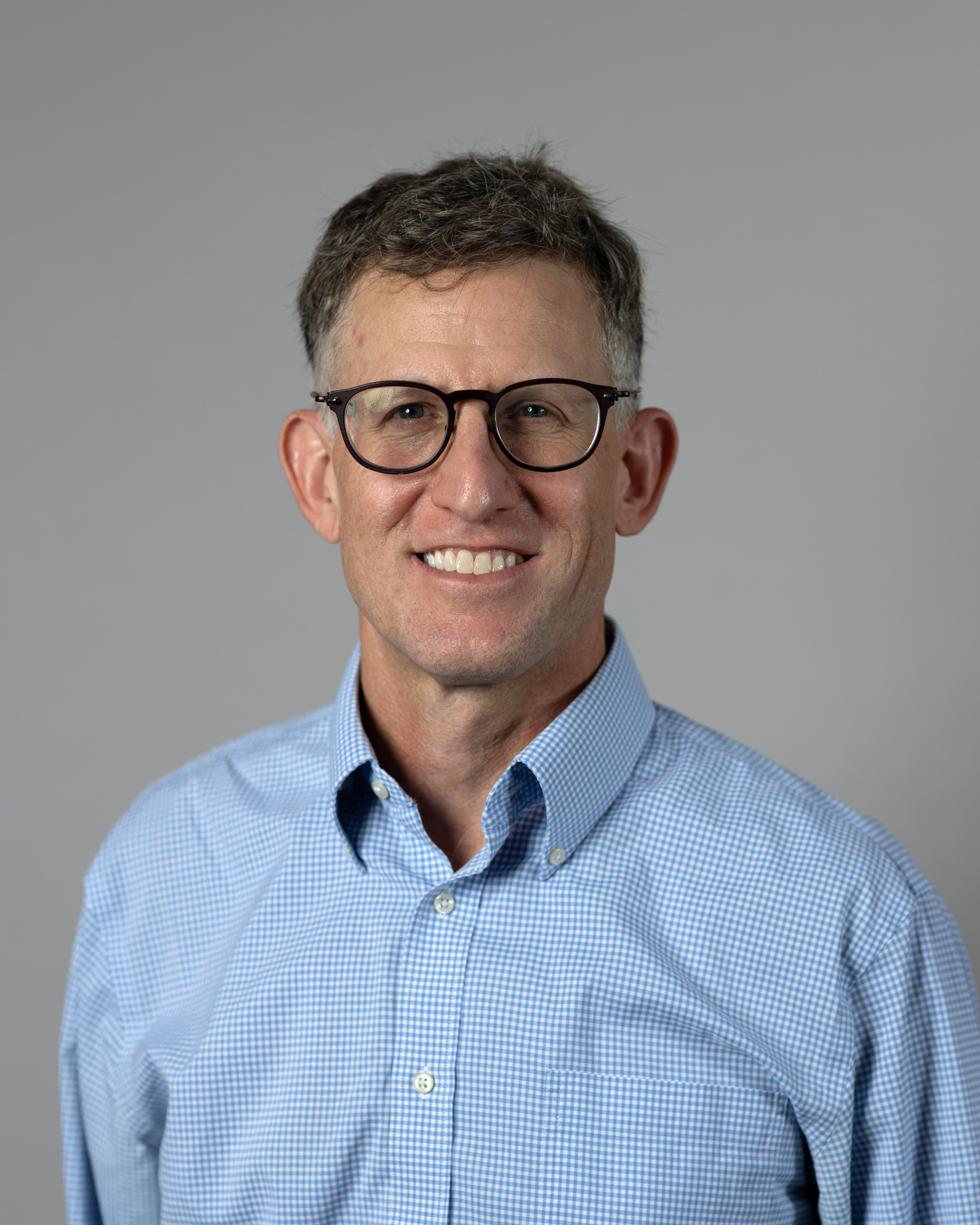
Joshua W Busby
2026 Grawemeyer world order award winner explores the connection between climate change and security
For his work to understand why climate change leads to negative security consequences in some places and not others, Joshua W. Busby, professor of public affairs at the University of Texas at Austin, will receive the 2026 Grawemeyer Award for Ideas Improving World Order. Busby presented these ideas in his book, “States and Nature: The Effects of Climate Change on Security.”
In the book, Busby explains how the combination of state capacity, political exclusion and international assistance determine the degree to which the impacts of climate change affect security for a country’s citizens.
“The effects of pollution from burning fossil fuels have fundamentally altered our climate and will get worse until we move to cleaner energy,” Busby said. “Even as we transition away from fossil fuels, we have to prepare for climate impacts, some of which are inevitable at this point.
“Countries with weak government capacity, where political institutions exclude some people from power and where foreign assistance is blocked or delivered to some groups and not others are likely to have the worst outcomes, including humanitarian emergencies and violent conflict,” he said.
“But the hopeful story of my book is that the worst consequences of climate change are not inevitable. Governments, even very poor ones, can take steps to protect their populations from climate harms and prevent large-scale loss of life from exposure to climate-related extreme weather, including cyclones and droughts. With a little bit of outside help, governments have been able to reduce their vulnerability to climate disasters and concerted action can prevent climate shocks from escalating to violence.”
Charles E. Ziegler, University of Louisville professor of political science, University Scholar and director of the Grawemeyer Award for Ideas Improving World Order, said Busby’s book examines the crucial global governance topic of confronting the negative implications of climate change in the realm of security.
“Busby’s carefully conducted case studies allow for comparison of neighboring states that are confronted with similar climate hazards, yet experience very different outcomes,” Ziegler said. “The policy implications for confronting the security costs of climate change are clear and particularly timely given controversy about how to deal with the global climate crisis.”
The Grawemeyer Award for World Order has been given annually since 1988.
“I am thrilled and humbled to have the book recognized this way and to join the august company of previous winners of this award,” Busby said.
Video Interviews with Past Recipients
Ken Conca – Interview with Bill Miller for the Global Connections TV program
2021 World Order Recipient Ken Conca
Fulfilling Social and Economic Rights
2019 World Order Recipients Sakiko Fukuda-Parr, Terra Lawson-Remer and Susan Randolph
Understanding the tipping points that can lead to genocide in Africa
2018 World Order Recipient Scott Straus
Schools for Conflict or for Peace in Afghanistan
2017 World Order Recipient Dana Burde
The Plague of Hidden, Everyday Violence Inflicted on the Poor
2016 World Order Recipients Gary Haugen and Victor Boutros
Understanding Clan-Based Cultures
2015 World Order Recipient Mark S. Weiner
An Original Take on Nuclear Proliferation
2014 World Order Recipient Jacques Hymans
Non-Violence is More Effective than Violence in Bringing about Change
2013 World Order Recipients Erica Chenoweth and Maria Stephan
What Went Wrong in the Congo
2012 World Order Recipient Severine Autesserre
Ending the Problem of Modern-Day Slavery
2011 World Order Recipient Kevin Bales
The Key to Achieving Lasting Peace in the Middle East
2010 World Order Recipient Trita Parsi
Interview With Michael Johnston
2009 World Order Recipient Michael Johnston